We develop books and briefs, reconstruct family and company histories, and deliver rigorous research and editorial polish for work that deserves to last.
AI is great. We use it to find some things quicker.
Concept to finished manuscript: research planning, archival discovery, interviewing, narrative structure, and editorial management. We serve authors, families, family foundations, and leaders who want a durable, elegant volume.
Research Projects
Deep, documented inquiries for clients. Source collection, provenance, document analysis, and clear findings written for decision‑makers.
Editing
Developmental edits, line‑edits, and reference checks that bring clarity and authority. We tune voice, structure, and sourcing without losing what is distinctive. We know that constructive criticism is an art form. (We are married to each other.)
Genealogical Research
Three pathways: family histories, company histories, and genealogy. We authenticate records, map lineages, and produce readable narratives with annotated documentation.
Approach
Our method is simple: disciplined questions, authoritative sources, and elegant presentation. The House of Barton Wilson is an independent practice. We value the pursuit of getting the facts straight as well as acknowledging and appreciating ambiguity. We believe that storytelling lies at the heart of good history. AI can never replace the human voice.
Counterterrorism Between the Wars — Mary S. Barton
Mary S. Barton explores counterterrorism in the years between World War I and World War II, starting with the attempted assassination of French Prime Minister George Clemenceau in 1919, and taking the story up to and beyond the double assassination of King Alexander I of Yugoslavia and French Foreign Minister Jean Louis Barthou in 1934.
In telling the story of counterterrorism over this period, Barton gives particular emphasis to Britain's attempts to quell revolutionary nationalist movements in India and throughout its empire, and to the Great Powers' combined efforts to counter the activities of the Communist International. Further to this, Barton discusses the establishment of the tools and infrastructure of modern intelligence, including the cooperation between the United Kingdom and United States which would evolve into the Five Eyes intelligence alliance. She gives weight to forgotten terrorism and arms traffic conventions, and explores the facilitating role which the Paris Peace Conference and the League of Nations played in this context. The stories told in Counterterrorism Between the Wars play out across the world, from the remains of the Austro-Hungarian, German, and Russian empires, to the Northwest Frontier and the Bengal Province of British India.
A century after the Paris Peace Conference of 1919, Counterterrorism Between the Wars is the first comprehensive study to fit together the mass production of weapons during the Great War with the diplomacy of the interwar era and the rise of state-sponsored terrorism during the 1920s and 1930s.
The Triumph of Improvisation — James Graham Wilson
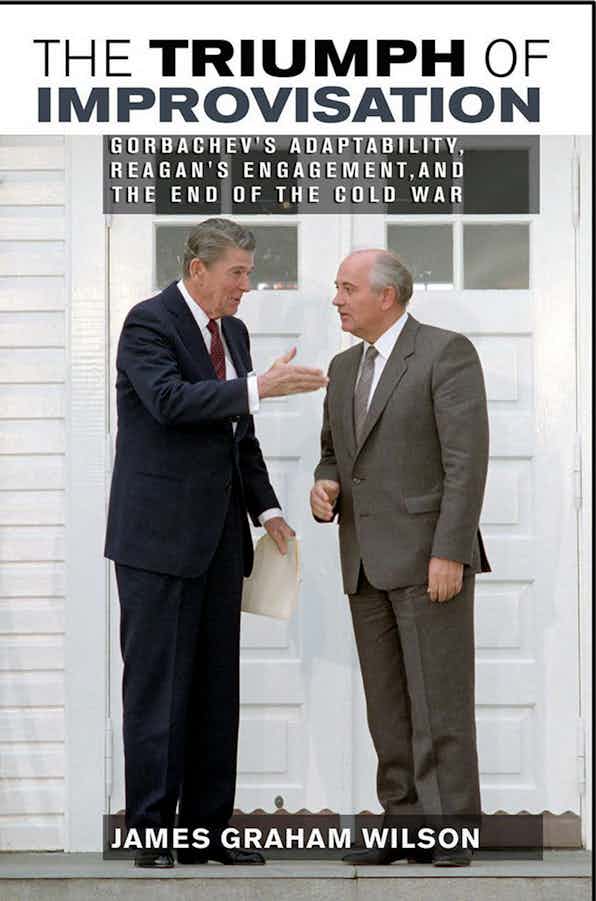
In The Triumph of Improvisation, James Graham Wilson takes a long view of the end of the Cold War, from the Soviet invasion of Afghanistan in December 1979 to Operation Desert Storm in January 1991. Drawing on deep archival research and recently declassified papers, Wilson argues that adaptation, improvisation, and engagement by individuals in positions of power ended the specter of a nuclear holocaust. Amid ambivalence and uncertainty, Mikhail Gorbachev, Ronald Reagan, George Shultz, and George H. W. Bush—and a host of other actors—engaged with adversaries and adapted to a rapidly changing international environment and information age in which global capitalism recovered as command economies failed. Eschewing the notion of a coherent grand strategy to end the Cold War, Wilson paints a vivid portrait of how leaders made choices; some made poor choices while others reacted prudently, imaginatively, and courageously to events they did not foresee. A book about the burdens of responsibility, the obstacles of domestic politics, and the human qualities of leadership, The Triumph of Improvisation concludes with a chapter describing how George H. W. Bush oversaw the construction of a new configuration of power after the fall of the Berlin Wall, one that resolved the fundamental components of the Cold War on Washington's terms.
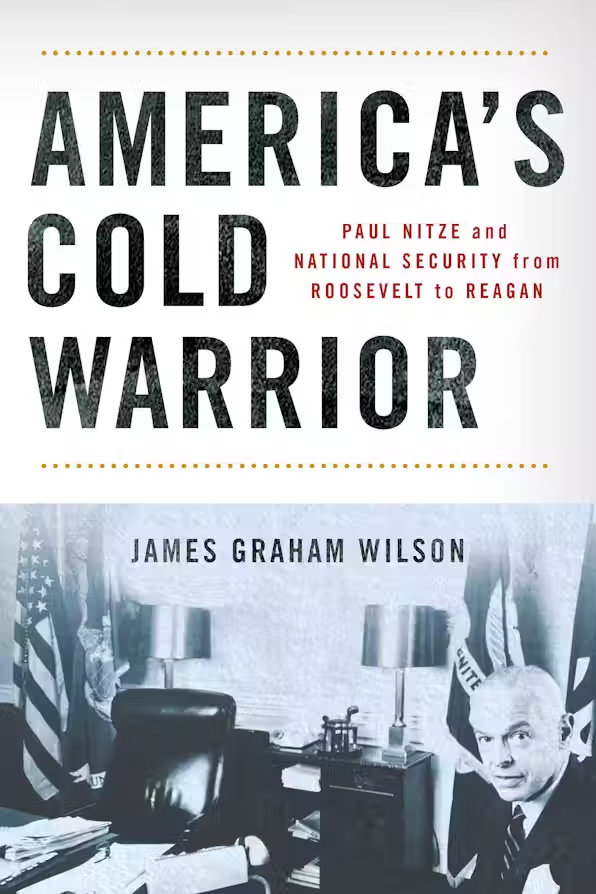
In America's Cold Warrior, James Graham Wilson traces Paul Nitze's career path in national security after World War II, a time when many of his mentors and peers returned to civilian life. Serving in eight presidential administrations, Nitze commanded White House attention even when he was out of government, especially with his withering criticism of Jimmy Carter during Carter's presidency. While Nitze is perhaps best known for leading the formulation of NSC-68, which Harry Truman signed in 1950, Wilson contends that Nitze's most significant contribution to American peace and security came in the painstaking work done in the 1980s to negotiate successful treaties with the Soviets to reduce nuclear weapons while simultaneously deflecting skeptics surrounding Ronald Reagan. America's Cold Warrior connects Nitze's career and concerns about strategic vulnerability to the post-9/11 era and the challenges of the 2020s, where the United States finds itself locked in geopolitical competition with the People's Republic of China and Russia.